

The Unsung Hero of Digestive Wellness
Fiber is often overlooked in our modern diets, yet it is one of the most important nutrients for a healthy gut. This indigestible carbohydrate plays a crucial role in supporting digestive function, feeding our beneficial gut bacteria, and promoting overall health. Understanding the different types of fiber and their benefits is a key step in the gut health revolution.
Two Types of Fiber: A Powerful Partnership
There are two main types of dietary fiber, and both are important for gut health:
Soluble Fiber
Soluble fiber dissolves in water to form a gel-like substance in the digestive tract. This type of fiber helps to slow down digestion, which can help you feel full and satisfied after a meal. It also plays a key role in managing blood sugar levels and lowering cholesterol.
Sources of soluble fiber include: Oats, barley, nuts, seeds, beans, lentils, peas, and some fruits and vegetables like apples and carrots.
Insoluble Fiber
Insoluble fiber does not dissolve in water. Instead, it adds bulk to the stool, which helps to promote regular bowel movements and prevent constipation. Think of it as a "broom" for your digestive system, helping to sweep things along.
Sources of insoluble fiber include: Whole grains, nuts, beans, and vegetables like cauliflower, green beans, and potatoes.
Fiber as Fuel for Your Microbiome
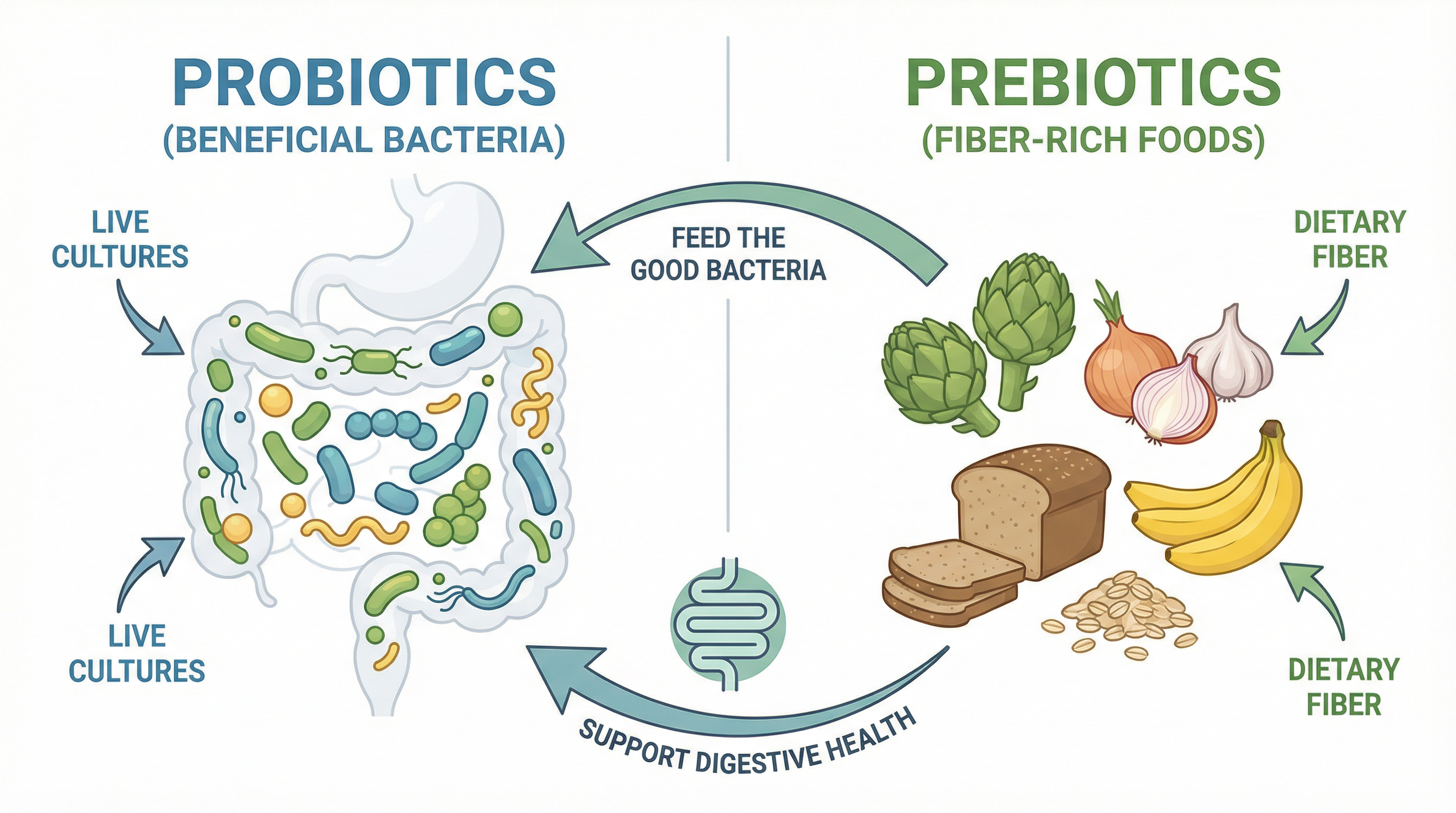
Perhaps the most important role of fiber in gut health is its function as a prebiotic. Your body can't digest fiber, but the beneficial bacteria in your gut microbiome can. When these bacteria ferment fiber, they produce short-chain fatty acids (SCFAs).
SCFAs, such as butyrate, have numerous health benefits:
- They are the primary source of energy for the cells lining your colon.
- They help to maintain a healthy gut barrier, preventing leaky gut.
- They have anti-inflammatory effects.
- They play a role in immune function and metabolism.
How to Increase Your Fiber Intake
Most adults do not get enough fiber in their diet. Here are some simple ways to increase your intake:
- Eat more whole fruits and vegetables.
- Choose whole grains over refined grains.
- Incorporate beans, lentils, and legumes into your meals.
- Add nuts and seeds to your salads, yogurt, or oatmeal.
- Start your day with a high-fiber breakfast cereal.
When increasing your fiber intake, it's important to do so gradually and to drink plenty of water. This will help to prevent digestive discomfort like gas and bloating.