

The Unsung Heroes of Digestion
Digestive enzymes are proteins that act as catalysts to break down the food we eat into smaller, absorbable nutrients. They are essential for proper digestion and play a crucial role in gut health. While our bodies naturally produce digestive enzymes, various factors can lead to a deficiency, resulting in digestive distress and poor nutrient absorption.
Understanding the role of digestive enzymes can help you determine if you might benefit from supplementation as part of a comprehensive approach to improving your gut health.
The Main Types of Digestive Enzymes
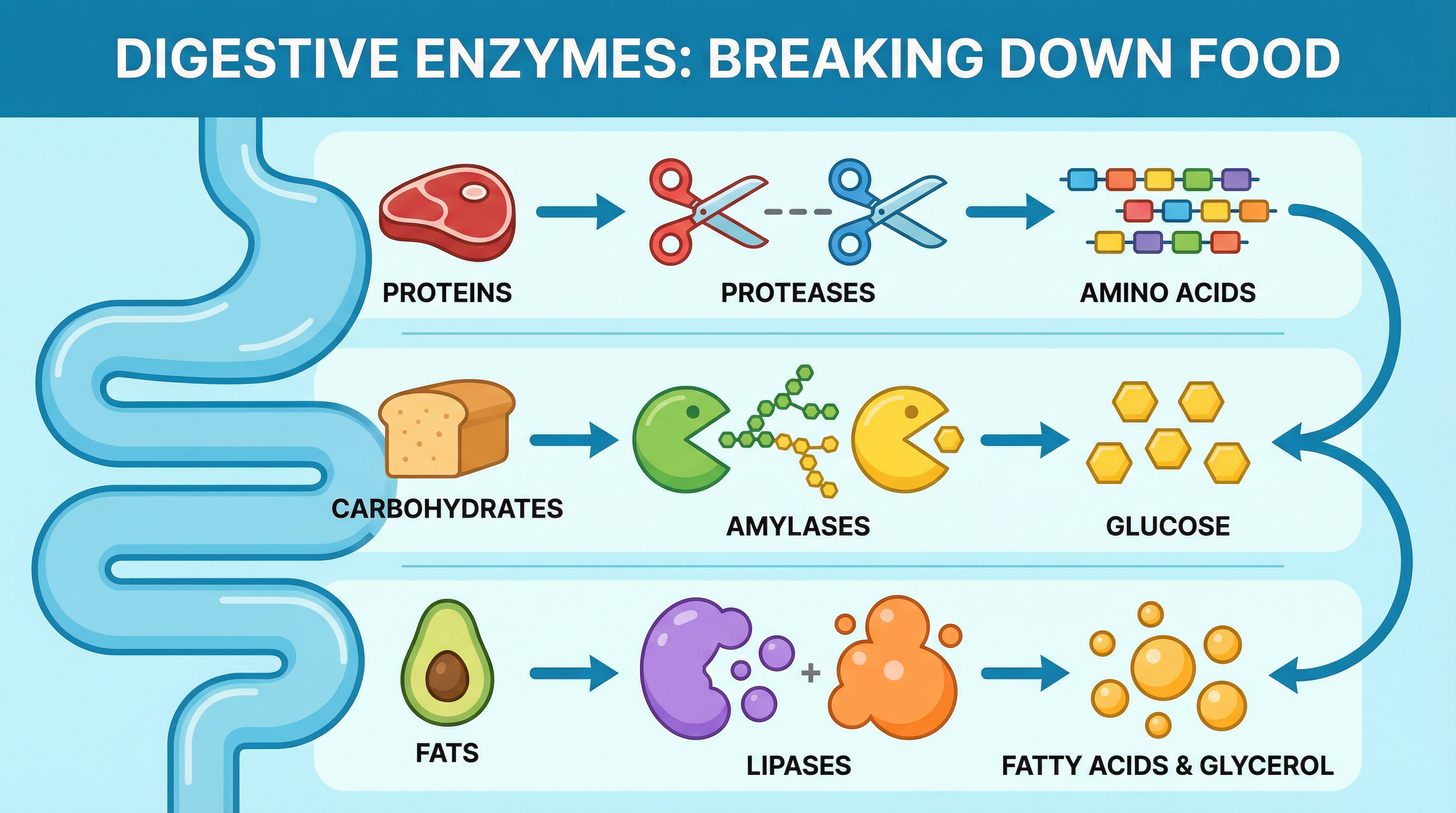
There are three main categories of digestive enzymes, each responsible for breaking down a specific macronutrient:
Amylase
Amylase is responsible for breaking down carbohydrates into simple sugars. It is produced in the salivary glands and the pancreas.
Protease
Protease breaks down proteins into amino acids. It is produced in the stomach, pancreas, and small intestine.
Lipase
Lipase is responsible for breaking down fats into fatty acids and glycerol. It is produced in the pancreas and small intestine.
Signs of Enzyme Deficiency
When your body doesn't produce enough digestive enzymes, you may experience a variety of digestive symptoms, including:
- Bloating and gas after meals
- A feeling of fullness after eating only a small amount of food
- Indigestion and heartburn
- Undigested food in the stool
- Floating stools (a sign of fat malabsorption)
These symptoms can also be signs of a broader gut imbalance, so it's important to look at the whole picture.
Who Might Benefit from Digestive Enzymes?
While not everyone needs to take digestive enzymes, certain individuals may find them beneficial:
- People with Pancreatic Insufficiency: Conditions like chronic pancreatitis can impair the pancreas's ability to produce enzymes.
- Individuals with Lactose Intolerance: A deficiency in the enzyme lactase can make it difficult to digest dairy products.
- Those with Celiac Disease or Crohn's Disease: These conditions can damage the small intestine, where many enzymes are produced.
- As Part of a Gut Healing Protocol: In some cases, digestive enzymes can be a helpful tool in a gut healing protocol to support digestion while the gut is repairing.
How to Choose and Use Digestive Enzymes
If you think you might benefit from digestive enzymes, it's important to choose a high-quality supplement. Look for a broad-spectrum formula that contains a variety of enzymes, including amylase, protease, and lipase. It's also best to consult with a healthcare professional, like a clinical dietitian, to determine the right type and dosage for your individual needs.
Digestive enzymes are typically taken with meals to aid in the digestion of food. By supporting your body's natural digestive processes, you can improve nutrient absorption, reduce digestive discomfort, and promote overall gut health.